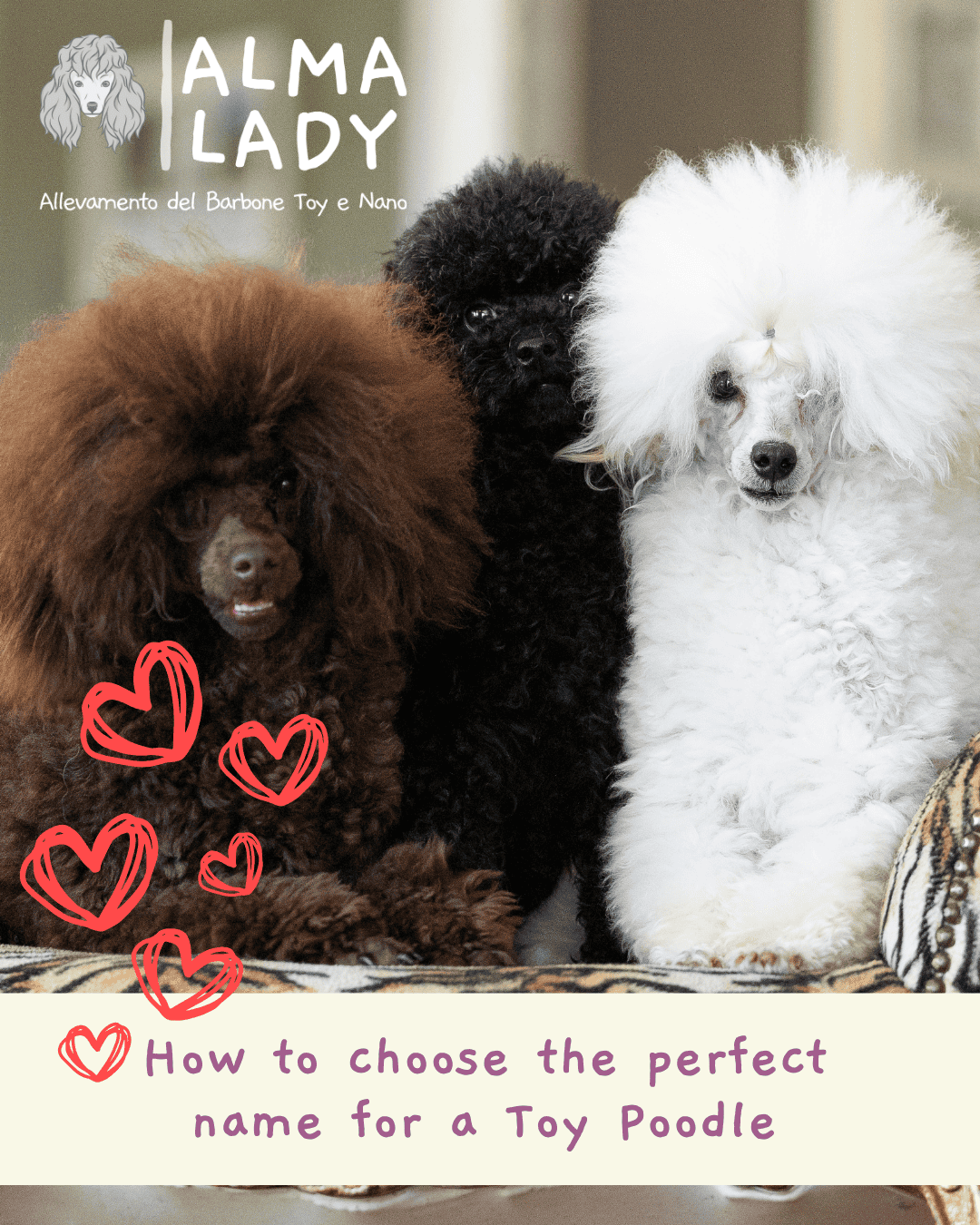
How to choose a name for toy poodle
Choosing a name for toy poodles is one of the best (and most delicate) moments when a puppy arrives in the family. It is a choice made with the heart, of course, but also with a pinch of the head. Because you will use that name every day: to call him, cuddle him, gently scold him, and proudly present him to the world.
Those who actually live with a Toy know this: it is not “just a small dog.” He is a constant presence, intelligent, sensitive, often very expressive. The name must fit him well, like a tailor-made suit.
The Toy Poodle is not just any dog (and the name should reflect that)
The Toy Poodle is attentive to words, tone, and intention. It learns its name quickly and associates it with emotions, situations and people.
A name that is too complicated or unclear risks confusing it; one that is too trivial risks not doing it justice.
Consider that the name for toy poodle must be unique and easy to pronounce.
The key is to find a balance between:
- sweetness
- pleasant sound
- ease of daily use
And yes, even a dash of poetry.
First observe the puppy, then choose the name for toy poodle
Many people choose a name for toy poodle before the puppy even arrives home. Nothing wrong with that, but the best advice is: watch it live a few days.
There is Toy:
- quiet and tender, always seeking contact
- lively, curious, always on the move
- Elegant, composed, almost “important” even as a puppy
Often he is the one who suggests the right name, without needing to think about it too much.
Length and sound: simple but important
For everyday use, the names that work best are:
- of 1 or 2 syllables
- with clear and sweet sounds
- easy to pronounce even at a distance
Classic but still effective examples:
Luna, Milo, Coco, Leo, Mia, Toby.
These names are perfect for family life, for recall and for creating an immediate and peaceful relationship.
What if the Toy Poodle is destined for expos?
Everything changes here, and it is important to make that clear.
If the Toy Poodle is a show dog, the name for official toy poodle should be prominent, elegant, and often composed of two (or more) words.
It is a tradition in the expo world and serves to give identity, recognition and prestige.
Examples:
- Royal Pearl
- Lady White Dream
- Silver Moonlight
In daily life, the dog will obviously have a shorter, more practical call name, but the full name remains on the pedigree and will accompany it throughout its show career.
In professional toy poodle breeders, such as ALMA LADY, this distinction is always carefully explained: an “important” name for documents and expos, a sweet and simple name for everyday life.
Choosing a poodle’s name based on coat color: inspiration yes, limitation no
Color can help come up with ideas, but it should not become a constraint.
- White toys: Snow, Pearl, Cloud, White
- Brown or chocolate toys: Mocha, Toffee, Brownie
- Black toys: Noir, Shadow, Moon
The advice is to avoid a toy poodle name that is too obvious or overused, especially if you frequently frequent parks, veterinarians, or dog-friendly settings.
A toy poodle name you will use for many years
Before you decide, try this simple exercise:
pronounces the name for toy poodle aloud as if you were to call him in the garden, at the vet, or around people.
If it comes naturally to you, if it makes you smile, if it excites you a little bit, it’s probably the one.
A Toy Poodle lives long and remains deeply attached to its family. The name becomes part of its identity and your history together.
In conclusion
Choosing a name for Toy Poodle is a gesture of love.
Whether it is a companion dog or a future expo star, it deserves a name that is thoughtful, harmonious, and consistent with who it is.
In caring, family-run breeders like ALMA LADY, this choice is always accompanied with care, because each Toy is unique and special.
And remember this: the perfect name is not the most fashionable one, but the one that, over time, you will feel is yours-and especially his.
FAQ - Frequently Asked Questions -

Come scegliere il nome perfetto per un barboncino?
The choice of name for a poodle should be based on three main drivers: functionality, identity, and harmony with the breed. From a practical point of view, the ideal name is short (one or two syllables), easily recognized by the dog and clearly distinguishable from basic commands such as “sit,” “stay,” or “no.”
From an identity perspective, the name should reflect the character of the poodle, which is an extremely intelligent, sensitive and elegant breed. Finally, it is useful to consider coat color, sex and personal style of the owner, avoiding overly common or overused names. A good name facilitates education, strengthens bonding and enhances the uniqueness of the dog.
Esistono regole ENCI da rispettare per il nome del barboncino nel pedigree?
Yes. The name of the poodle intended for FCI pedigree must meet very specific formal criteria. It must be unique, non-offensive, unambiguous and not already identically present in the reference breeding registry. No arbitrary symbols, numbers or abbreviations are allowed.
In registered subjects from recognized breeding, the name is often preceded or followed by the official affix, which identifies the line and origin of the dog. It is important to choose a name that is consistent and enduring, because it will remain associated with the subject throughout its breeding and exhibition life. The choice of name is not only aesthetic, but also identity and documentary.
Il nome del barboncino influisce su educazione e comportamento?
Yes, naming directly affects daily communication and learning. Poodles, being highly receptive and cognitively advanced, respond best to clear, sonorous and consistent names. A name that is too long or similar to other verbal cues can be confusing and slow down training.
Always using the same name, in a positive tone, reinforces recall and trust. In the first months of life, the name becomes a key educational tool: associated with positive experiences, it promotes attention, cooperation and emotional security. For this reason, name choice is an integral part of proper puppy management.
By Alma Lady Kennel: toy and miniature poodle breeder ENCI/FCI registered, Villanova Mondovì, Italy.